
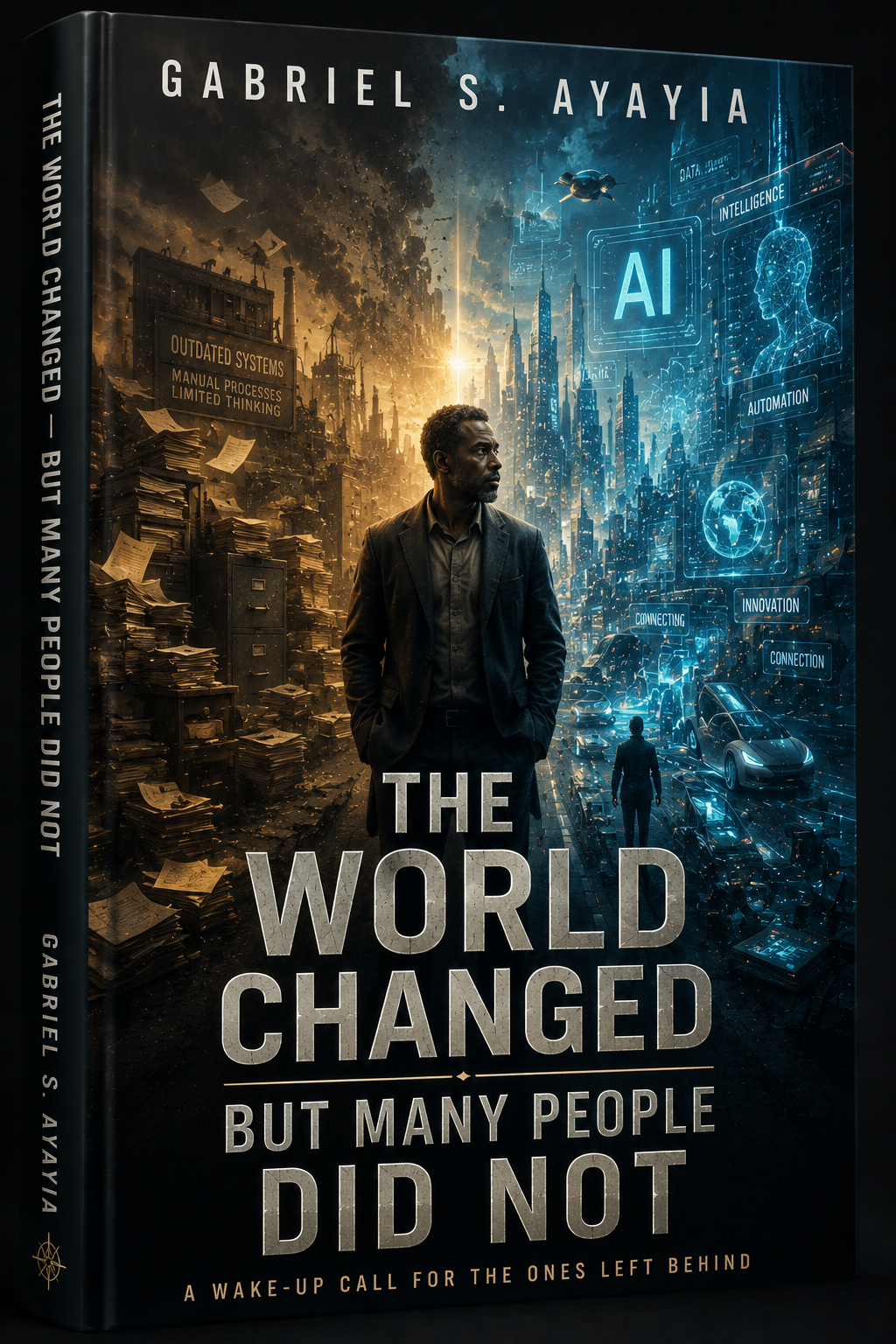

The world changed.
Technology evolved.
Artificial intelligence arrived.
Systems transformed.
But millions of people never adapted.
The World Changed — But Many People Did Not is a bold and deeply reflective examination of modern society, technological disruption, digital transformation, human resistance to change, and the growing gap between the future and those unprepared for it.
As artificial intelligence, automation, digital systems, and global technological shifts redefine industries and everyday life, many people remain trapped in:
- outdated thinking,
- obsolete systems,
- fear of innovation,
- rigid mental frameworks,
- digital illiteracy,
- emotional resistance,
- and survival models built for a world that no longer exists.
This book explores one of the greatest silent crises of the modern age:
What happens to people who fail to evolve while the world evolves around them?
Blending philosophy, technology reflection, social commentary, psychology, human development, and future-oriented thinking, Gabriel S. Ayayia examines:
- the psychological fear of change,
- the rise of artificial intelligence,
- automation and job disruption,
- digital transformation,
- information overload,
- adaptation and reinvention,
- generational technological divides,
- mindset evolution,
- emotional exhaustion in the digital age,
- and the growing struggle between old systems and future realities.
At its core, the book is not merely about technology.
It is about human survival in changing systems.
The World Changed — But Many People Did Not challenges readers to confront difficult realities:
- Why are many people still thinking with outdated frameworks?
- Why do some societies adapt faster than others?
- Why are millions overwhelmed by modern systems?
- Why do technological revolutions create emotional and economic displacement?
- And what happens to those who refuse to evolve?
The book also offers hope.
It argues that adaptation is still possible.
That reinvention is still possible.
That human beings can still learn, evolve, and thrive in a rapidly changing world — if they are willing to rethink themselves.
This work is ideal for:
- students,
- entrepreneurs,
- educators,
- professionals,
- policymakers,
- digital creators,
- AI learners,
- young adults,
- leaders,
- and anyone trying to understand how technology is reshaping human existence.
The World Changed — But Many People Did Not is ultimately a wake-up call.
Not against technology.
But against stagnation.
Because the future does not wait for those unwilling to grow.






Reviews
There are no reviews yet.