
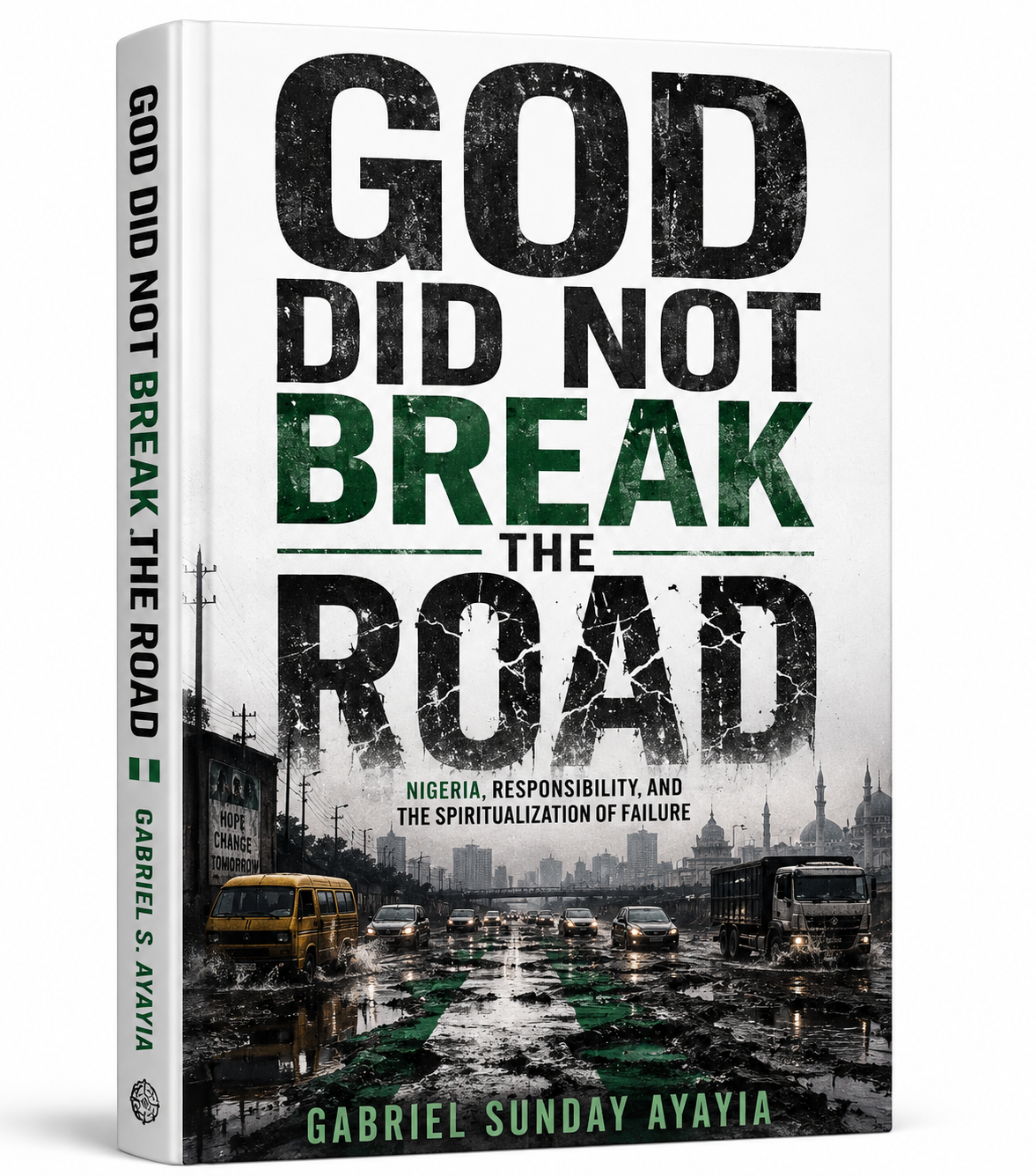

Nigeria is hurting.
The roads are broken.
The systems are collapsing.
Electricity fails.
Institutions weaken.
Corruption grows.
Hope disappears.
And yet, many people continue to spiritualize problems that are deeply human.
God Did Not Break the Road is a bold philosophical, political, and social critique of responsibility, governance, leadership, silence, and collective failure in Nigeria.
But this book is not merely about roads.
The “road” is symbolic.
It is a metaphor for:
- broken governance,
- failed leadership,
- collapsing institutions,
- corruption,
- neglected infrastructure,
- economic hardship,
- social silence,
- civic irresponsibility,
- and the wider condition of society itself.
The road represents:
- the direction of a nation,
- the systems people depend on,
- the structures leaders manage,
- and the responsibilities citizens often abandon.
This book argues that many societal failures are not divine punishments, curses, or mysterious spiritual attacks.
They are consequences of:
- human negligence,
- failed systems,
- poor governance,
- corruption,
- silence,
- indifference,
- weak accountability,
- and the refusal to confront uncomfortable truths.
Too often, people pray over problems they should organize against.
They spiritualize issues that require responsibility, competence, courage, planning, and action.
This is not a book against faith.
It is a book against irresponsibility disguised as spirituality.
Through philosophy, social criticism, political reflection, ethics, and emotionally powerful analysis, Gabriel S. Ayayia confronts difficult questions:
- Why do societies normalize suffering?
- Why do people blame heaven for failures created on earth?
- What happens when citizens stop demanding accountability?
- Can prayer replace responsibility?
- How does silence sustain broken systems?
- Why do many nations remain trapped in cycles of failure despite enormous potential?
This book challenges readers to rethink:
- governance,
- leadership,
- citizenship,
- accountability,
- religion,
- responsibility,
- and the future of Nigeria itself.
At its core, God Did Not Break the Road is a wake-up call.
A call to stop outsourcing responsibility.
A call to rebuild systems.
A call to confront truth honestly.
A call to recognize that nations do not collapse accidentally.
Human beings make decisions.
Human beings create systems.
Human beings neglect systems.
And human beings must also rebuild them.
This is not merely a critique of Nigeria.
It is a reflection on every society where:
- dysfunction becomes normal,
- corruption becomes tolerated,
- suffering becomes spiritualized,
- and responsibility disappears.



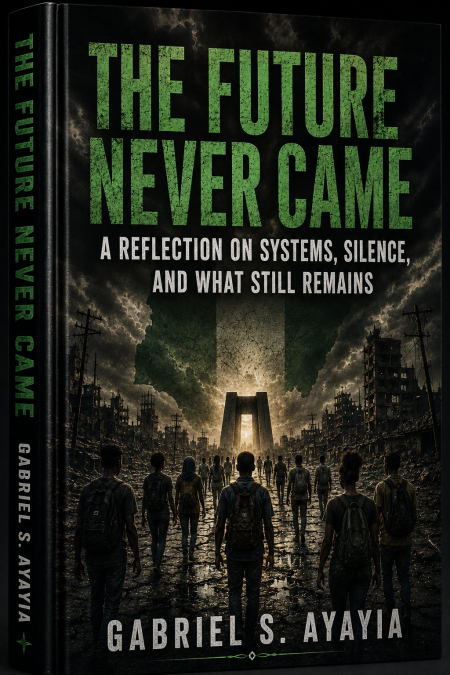
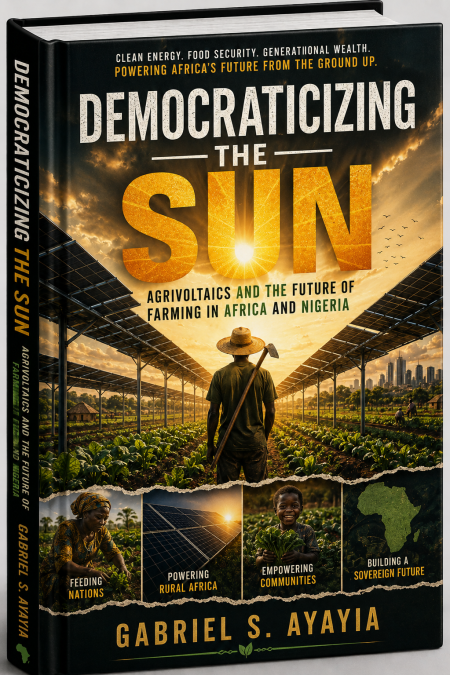
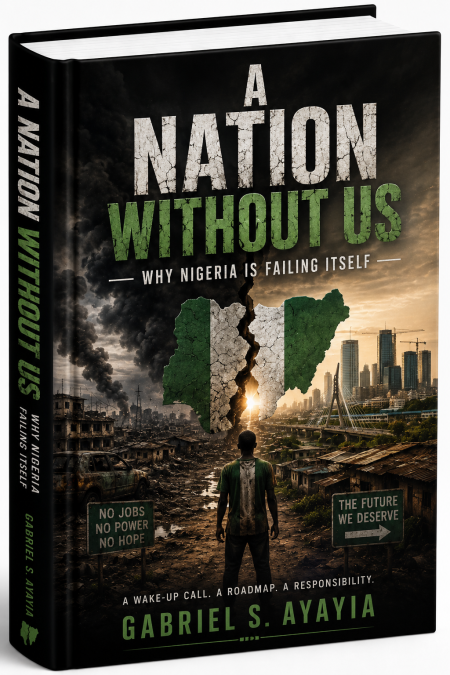
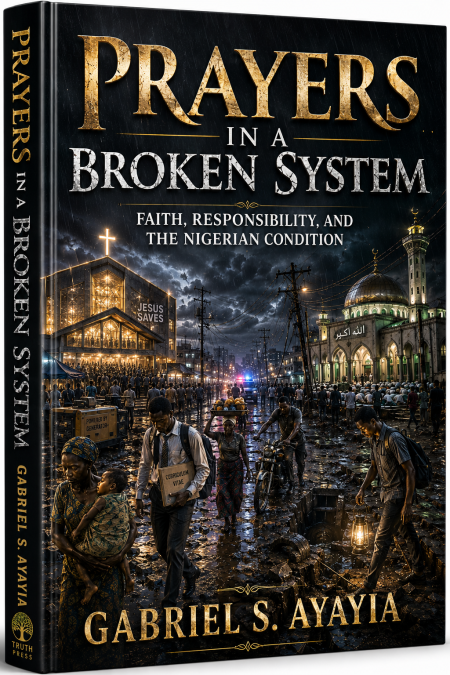
Reviews
There are no reviews yet.